
How to Learn Spanish When You Have a Full-Time Job
Want to learn Spanish but feel like you simply don't have the time? You're not alone.
Between work, commuting, family, social plans, household jobs and trying to have some sort of life outside of all of that, finding an extra hour every day to study Spanish can feel impossible.
And that's before you've even considered the question:
“What am I actually supposed to do with that hour?”
The good news is that you don't need to spend hours studying Spanish every day to make progress. If you have a full-time job, the key is to make Spanish realistic, regular and useful — rather than trying to squeeze huge study sessions into an already packed schedule.
Here's how.
Can you learn Spanish while working full-time?
Yes, absolutely.
You can learn Spanish while working full-time by building short, consistent periods of Spanish practice into your existing routine. You don't necessarily need two hours every evening.
In fact, 20–30 minutes of focused Spanish practice several times a week can be much more sustainable than an ambitious study plan that you abandon after two weeks. The goal isn't to find enormous amounts of free time. It's to use the time you already have better.
Stop waiting for the perfect time to study Spanish
This is one of the biggest traps for busy learners.
You tell yourself: “I'll study Spanish tonight when I've finished everything.”
Then work runs late. You're tired. Dinner needs making. You have an email to answer. And suddenly it's 10pm. Spanish study gets pushed to tomorrow.
Tomorrow becomes next week. And before you know it, another month has gone by.
Instead, I propose making Spanish small enough that you can actually fit it into your day.
For example:
- 10 minutes while you have your morning coffee
- A Spanish podcast during your commute
- 15 minutes of vocabulary practice at lunch
- A Spanish video while cooking dinner
- A short conversation with a language partner at the weekend
- Reading a few pages of a Spanish book before bed
Small doesn't mean pointless.
Consistency beats intensity when you're learning a language alongside a busy life.
Focus on speaking, not just studying
Here's where many adult learners get stuck.
You can spend years learning Spanish, building your vocabulary, working through grammar exercises and getting better and better at understanding conversations. You might even feel like you know quite a lot of Spanish.
Then someone actually speaks to you and suddenly... nothing. Probably panic; then disappointment creeps in...
You freeze, search for the right words and find yourself translating everything in your head. It's frustrating, especially when you know that you understand Spanish — so why can't you seem to speak it?
The problem is that understanding Spanish and speaking Spanish are different skills. Speaking means retrieving words, putting sentences together and responding in real time, often without having the luxury of stopping to think.
And like any skill, it gets easier through practice.
You don't need to be fluent before you start having conversations. The conversations are what help you become fluent.
Find ways to practise Spanish outside the classroom
Classes are useful, but they're not the only place where language learning happens. If you work full-time, finding regular opportunities to speak Spanish can be one of the hardest parts.
You might have a weekly lesson, but what happens between classes?
Try finding ways to use Spanish in real conversations, such as:
- Joining a Spanish conversation group
- Finding a language exchange partner
- Attending Spanish cultural events
- Speaking Spanish with friends or family who are also learning
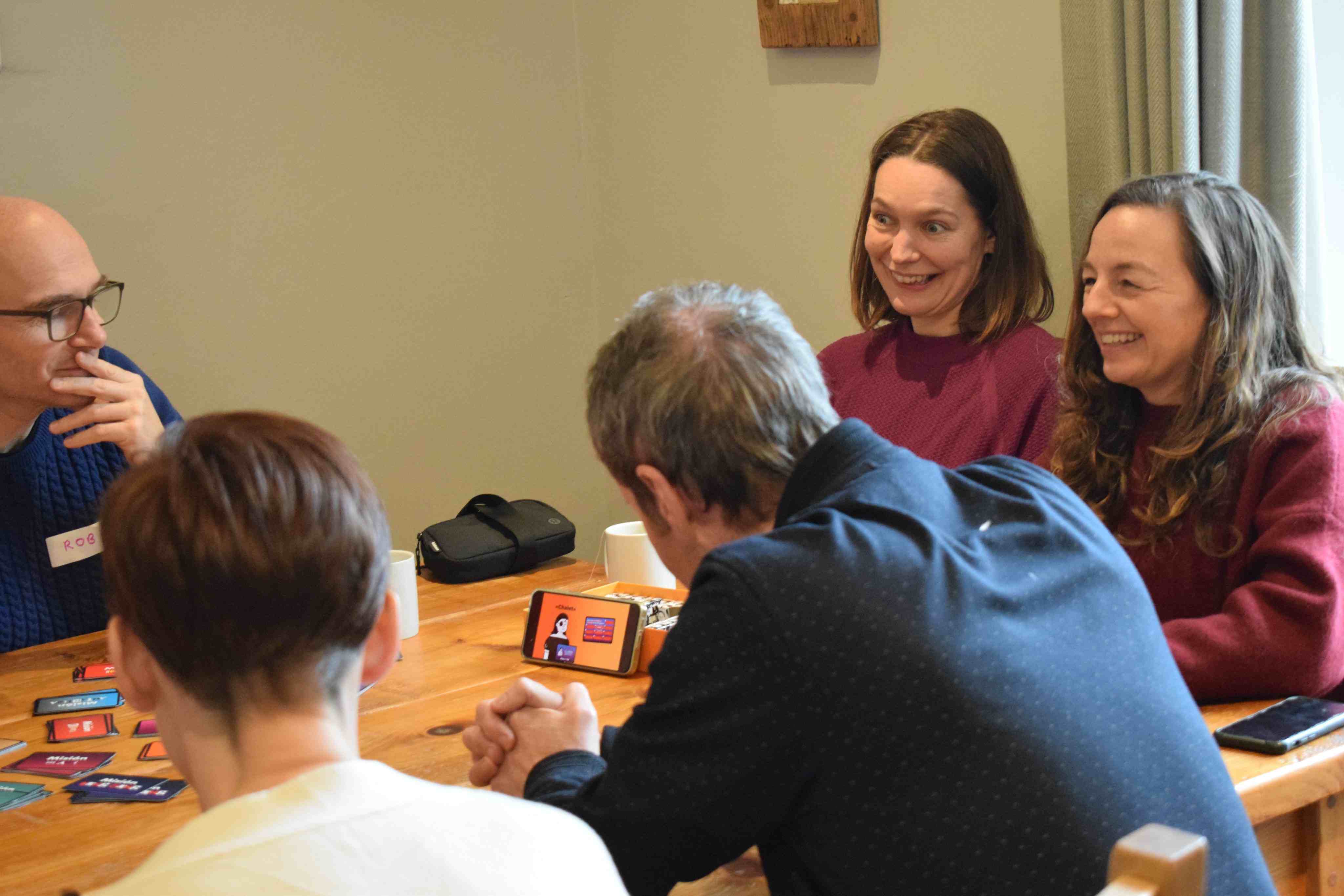
- Take part in a Spanish immersion retreat, but in the UK. Take a few days off and immerse yourself in the Spanish language and culture without leaving the country.
This is exactly why we created our Spanish Immersion UK retreats.
Instead of trying to squeeze another Spanish lesson into your already busy working week, you can take a few days to properly immerse yourself in the language.
Don't wait until your Spanish is “good enough”
This is one of the biggest traps Spanish learners fall into. You tell yourself that you'll start speaking properly once you've learned a bit more vocabulary, finally mastered those tricky verb tenses or feel a little more confident. It sounds sensible, but the problem is that confidence doesn't usually come first — it grows through speaking.
At the beginning, conversations might feel uncomfortable. You might know exactly what you want to say in English but struggle to find the Spanish. You might forget a word you've used a hundred times before, muddle up your tenses or say something that comes out completely differently from how you intended. And yes, sometimes you'll walk away from a conversation and suddenly remember the perfect sentence you should have said.
That's all part of the process.
The more you put yourself in those situations, the more familiar they become. You start finding different ways to explain something when you don't know a particular word. You stop worrying quite so much about getting every verb ending right. You begin recognising phrases that you've heard before and using them yourself. Slowly, the pauses become shorter, the sentences come more easily, and speaking starts to feel less like a test and more like a conversation.
You don't become confident enough to speak and then start speaking. You start speaking, make mistakes, learn from them, and gradually become more confident.
That's why creating a safe, supportive environment where you can actually use Spanish is so important. And it's one of the reasons our Spanish Immersion Holidays in the UK are built around more than just classroom learning. You're surrounded by Spanish for the whole experience, with plenty of opportunities to chat, practise and try things out without the pressure of having to be perfect.
Because ultimately, the goal isn't to speak flawless Spanish.
It's to feel confident enough to open your mouth, have the conversation and keep it going.
The secret is making Spanish fit your life
When you have a full-time job, it can feel like learning Spanish means finding yet another hour in an already busy day. But it doesn't have to be that way.
The key is finding small, realistic ways to bring Spanish into the life you already have. Listen to a Spanish podcast on your commute, watch a Spanish film instead of your usual show, practise a few words over your morning coffee or find someone to have a conversation with once a week. None of these things feels huge, but over time, they add up.
Of course, sometimes you need more than a few minutes here and there. That's where a Spanish immersion retreat can help.
Instead of trying to squeeze Spanish around your working week, you can take a few days to properly immerse yourself — learning with a native teacher, speaking with other learners and using Spanish throughout the day.
You don't need to be fluent.
You don't need to have endless free time.
And you don't need to move to Spain.
You just need to start using the Spanish you already know.